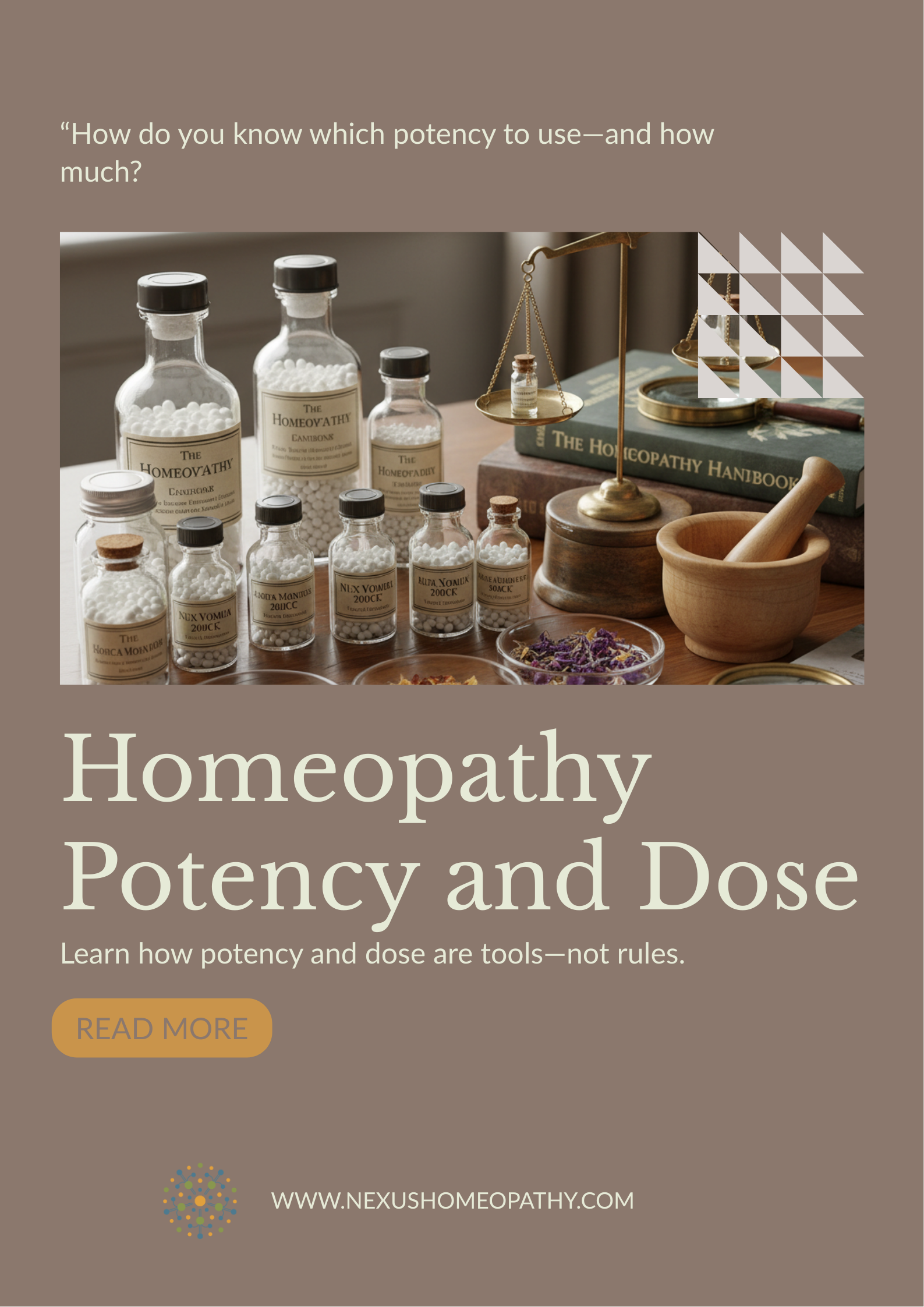
One of the most common questions people have about homeopathy is:
“How do you know which potency to use—and how much?”
Unlike conventional medicine, where dosing is often based on body weight, lab values, or standardized protocols, homeopathy works on a different level. Potency and dose are determined not by the diagnosis alone, but by the person experiencing the condition.
Potency: It’s Not About Strength
In homeopathy, potency does not mean “stronger” or “weaker” in the conventional sense. Instead, potency refers to the degree of dilution and succussion (a specific shaking process) used to prepare the remedy. Paradoxically, higher potencies are more diluted, yet often act more deeply.
Choosing the correct potency depends on several factors:
The nature of the condition
Acute conditions often respond well to lower or moderate potencies, while chronic conditions sometimes require higher potencies to address deeper emotional imbalances.The sensitivity of the individual
Highly sensitive people may need lower potencies to prevent aggravation which a skilled homeopath can help determine.The level of disturbance
Emotional, mental, and long-standing issues typically call for different potencies than short-lived physical complaints.The duration of chronic illness
Chronic illness that is both physical and mental often requires using low potencies to address physical imbalances before using higher potencies for the mental imbalances.
An experienced homeopath evaluates how deeply the condition affects the person—physically, emotionally, and mentally—before selecting a potency.
Dose: Less Is Often More
Homeopathy follows the principle of the minimum effective dose. The goal is not to overwhelm the system, but to gently stimulate the body’s innate healing response.
Dose refers to:
How often the remedy is taken
How many pellets or drops are used
How long the remedy is continued
In acute situations, a remedy may be repeated more frequently until improvement begins. Once the body responds, dosing is often reduced or stopped altogether. In chronic care, remedies may be taken daily or sometimes less often as a single dose that is allowed to act over weeks or even months.
The key is observation. When improvement is occurring, repeating a remedy unnecessarily can interfere with the healing process rather than support it.
Individualization Is Everything
Two people with the same diagnosis may receive the same remedy—but not necessarily the same potency or dose. Homeopathy is individualized medicine. The homeopath considers:
Symptom intensity and duration
Overall vitality and resilience
Emotional and mental state
Past medical history and response to treatment
This is why self-prescribing beyond basic acute care can sometimes lead to confusion or stalled progress. What works beautifully for one person may not be appropriate for another.
Adjusting Along the Way
Potency and dose are not fixed decisions. As healing unfolds, the homeopath may adjust potency, change the dosing schedule, or wait and allow the remedy to continue working. Healing is viewed as a dynamic process, not a linear one.
The Bigger Picture
Ultimately, potency and dose are tools—not rules. They are chosen to match the individual, the condition, and the moment in time. When properly selected, a homeopathic remedy works with the body, not against it, supporting a return to balance rather than forcing change.
This thoughtful, personalized approach is what allows homeopathy to be both gentle and powerful—meeting the body where it is, and guiding it toward where it needs to go.
If you are experiencing POTS, MCAS, hEDS or any chronic illness, and would like to learn more about homeopathy and how it can potentially help you, please contact me.
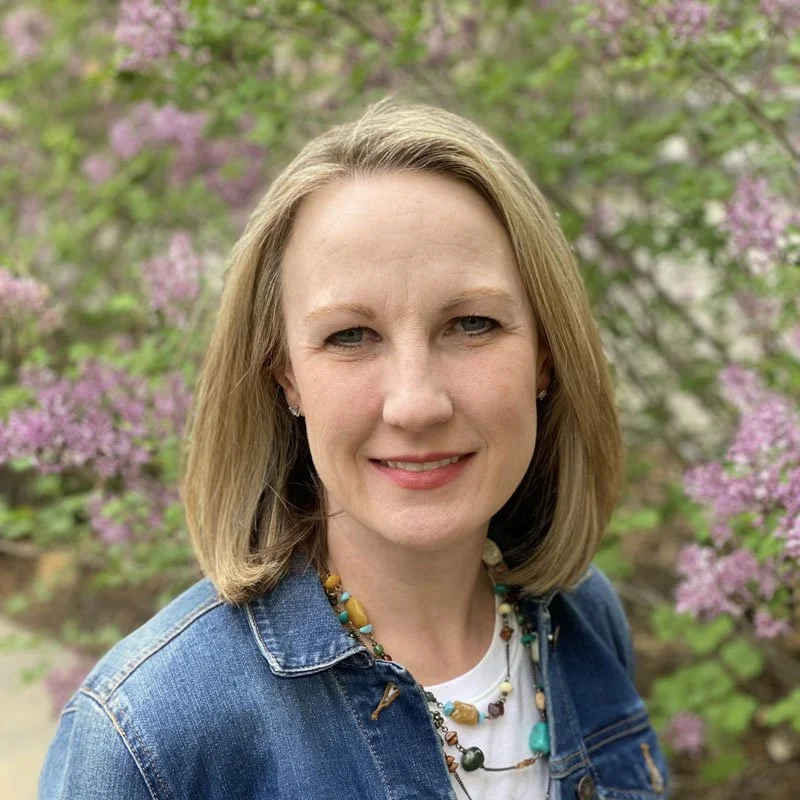
Josie Semmes, LPH,CHP, CCH, CH, has been in practice for over 4 years and received her homeopathy degree from the Canadian College of Homeopathic Medicine. She specializes in helping those with chronic conditions, with a focus on helping patients with POTS/EDS/MCAS and those with other types of Dysautonomia. She also holds certifications as a clinical herbalist and nutritionist. She is a board-certified Homeopath and licensed practitioner through the State of Arizona.
Disclaimer: This article is for educational purposes only. It should not replace the advice of your primary care physician (PCP) or other physicians which you are providing you care. It is recommended that you consult with your PCP before starting homeopathic medicine or any other form of complementary medicine. Do not use this article as a means to diagnose a health condition. Speak to your PCP if you think that your condition may be serious, or before discontinuing any medication that has been prescribed for you, or before starting any new treatment.