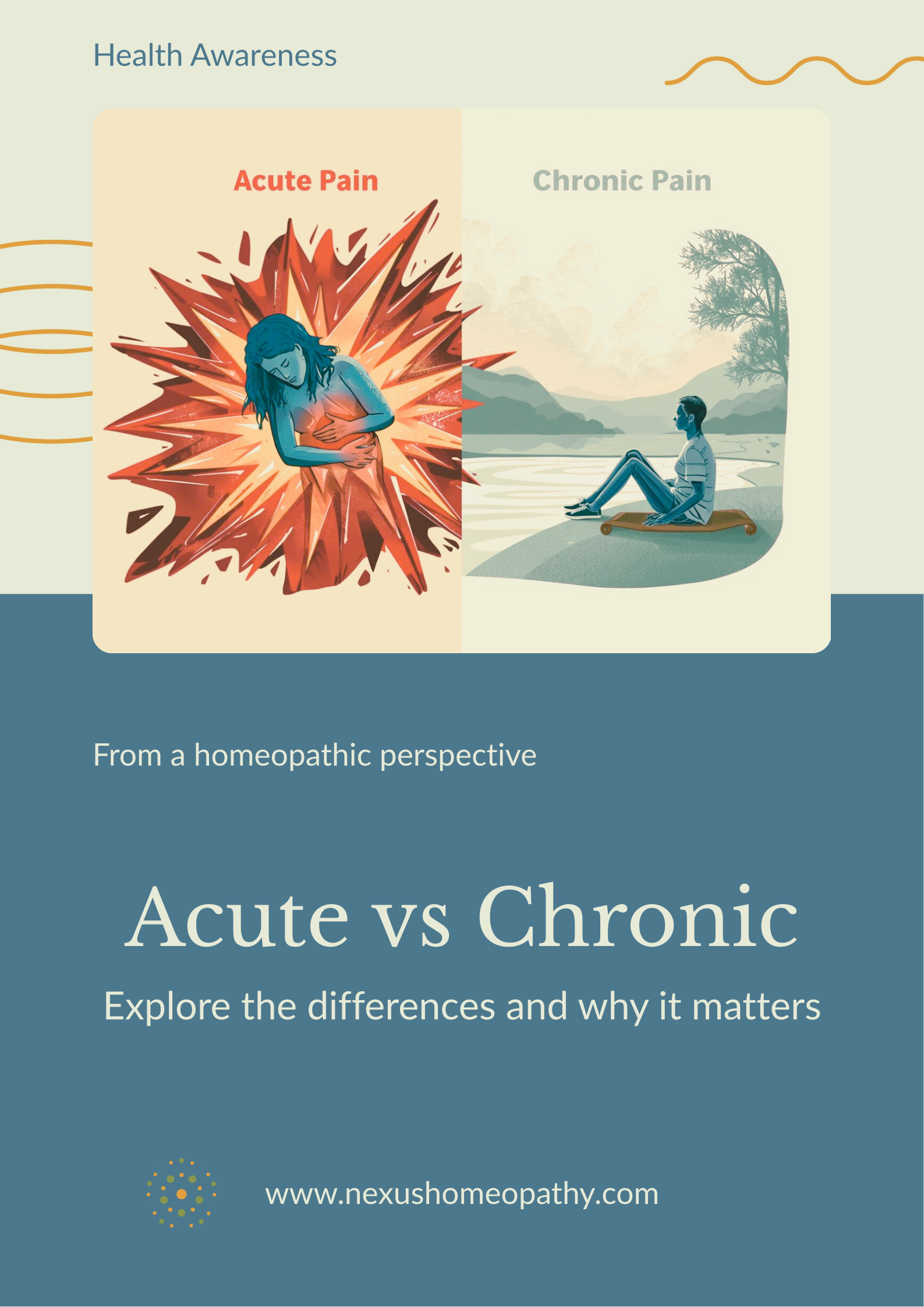
Not all health conditions are created equal. Some come on fast and resolve quickly. Others unfold slowly, linger, and become part of daily life. Understanding the difference between acute and chronic conditions isn’t just helpful—it’s essential, especially when choosing the right approach to healing.
Acute Conditions
Acute conditions tend to arrive suddenly and loudly. They may feel intense or alarming, but the good news is that they usually have a strong potential for quick and complete recovery when properly supported.
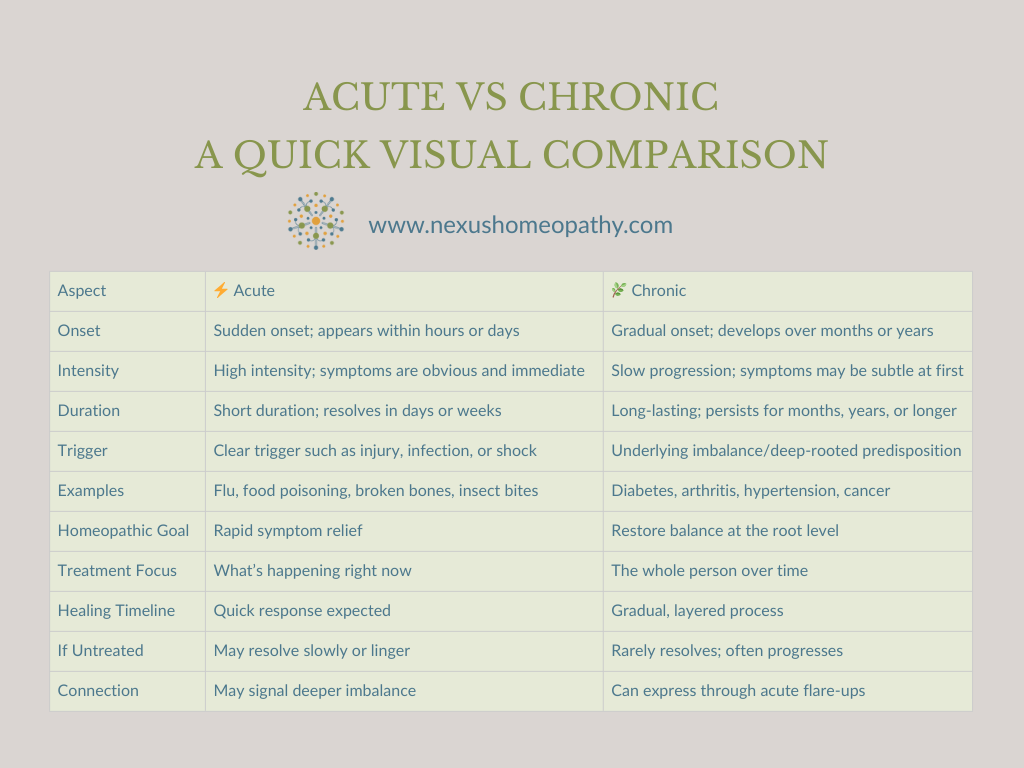
Onset: Rapid—hours to days
Duration: Short-term, with a clear beginning, middle, and end
Examples: Food poisoning, insect bites, broken bones, flu, common cold, and acute emotional shock from fright or grief
Chronic Conditions
Chronic conditions are different. They often develop slowly, sometimes so gradually that they’re easy to ignore at first. Many chronic illnesses stem from unresolved or repeatedly suppressed acute conditions.
Onset: Gradual—months to years
Duration: Long-term or ongoing, sometimes lasting decades
Examples: Diabetes, cancer, high blood pressure, arthritis, bronchitis, dementia
Homeopathic Care for Acute Conditions
Acute situations are often well-suited for home care, especially when you have access to reliable homeopathic references, acute care websites, or software. That said, professional guidance is always recommended if symptoms feel confusing, intense, or are not improving as expected.
Approach: Focused and symptom-specific. The goal is rapid relief by addressing what is showing up right now.
Therapeutic Strategy: Remedies are chosen to stimulate a natural healing response from the immune or nervous system.
Key Insight: While many acute conditions may resolve on their own, homeopathic remedies can often shorten the duration, ease discomfort, and support a smoother recovery.
Homeopathic Care for Chronic Conditions
From a homeopathic perspective, a chronic condition signals a deeper imbalance—a predisposition within the system that needs careful, individualized attention.
Therapeutic Strategy: The focus is on identifying and addressing the root cause, not simply managing or suppressing symptoms.
The Process: Chronic cases require skillful case-taking and often unfold in layers over time. Healing may take months, as the body gradually restores balance and vitality.
Key Insight: Chronic conditions rarely resolve on their own. Long-term recovery depends on a personalized and strategic approach.
The Relationship Between Acute and Chronic Conditions
Acute and chronic states are not separate—they are often deeply connected.
Acute Flare-Ups:
Ongoing chronic imbalances can express themselves through recurring acute illnesses, such as frequent colds or flus.Progression:
Acute illnesses that are repeatedly untreated or suppressed may evolve into chronic disease.Order of Healing:
Homeopaths typically address acute symptoms first—what’s bothering the patient most—while keeping the long-term chronic picture in mind.
When Should You See a Homeopath?
If you’re unsure whether what you’re experiencing is acute or chronic, you’re not alone—and you don’t need to figure it out on your own.
Chronic conditions are unique to each person, which is why self-prescribing can be ineffective. The wrong remedy, potency, or dose may slow healing or miss the root cause entirely.
It’s completely normal to feel uncertain about what’s happening in your body or mind. A trained and licensed homeopath can help clarify this through a thorough acute or chronic consultation, guiding you toward the most appropriate and effective care ensuring a safe, personalized approach that supports lasting recovery.
Sometimes, the first step in healing is simply understanding what you’re dealing with—and you don’t have to do that part alone.
If you are experiencing POTS, MCAS, hEDS or any chronic illness, and would like to learn more about homeopathy and how it can potentially help you, please contact me.
Josie Semmes, LPH,CHP, CCH, CH, has been in practice for over 4 years and received her homeopathy degree from the Canadian College of Homeopathic Medicine. She specializes in helping those with chronic conditions, with a focus on helping patients with POTS/EDS/MCAS and those with other types of Dysautonomia. She also holds certifications as a clinical herbalist and nutritionist. She is a board-certified Homeopath and licensed practitioner through the State of Arizona.
Disclaimer: This article is for educational purposes only. It should not replace the advice of your primary care physician (PCP) or other physicians which you are providing you care. It is recommended that you consult with your PCP before starting homeopathic medicine or any other form of complementary medicine. Do not use this article as a means to diagnose a health condition. Speak to your PCP if you think that your condition may be serious, or before discontinuing any medication that has been prescribed for you, or before starting any new treatment.